Careful, considered shaping that gives trees back their form — and gives you back your light. Three techniques, one goal: trees that stay healthy, balanced and in the right shape for the space they live in.
Methodical shaping
Whether a tree has outgrown its space, lost its balance, or stopped letting light through to the garden — there's a surgical response for each. Every cut is planned, every movement is roped, and every decision is made with the tree's long-term health in mind.
Serving Brighton, Hove, Ringmer, Lewes, Seaford, Shoreham, Henfield, Worthing and all surrounding BN postcodes.
01 — Crown Reduction
Reduces a tree's length and spread of branches to aid healthy growth and longevity. It is used to reshape a tree, slow down root growth, manage a tree in a restricted area, or give your tree back its proper form when it has become imbalanced.
Reducing the lengths of branches evenly throughout the canopy ensures that the tree keeps its natural form — the finished result should look considered, not cut.
02 — Crown Thinning
Removing a proportion of the inner branches of a tree to increase light penetration, while preserving the tree's natural shape and outline. Thinning allows more light to travel through the canopy — ideal for gardens that have gone dark.
We also take the opportunity to remove any deadwood during this process, leaving a cleaner, safer canopy behind.
03 — Crown Lifting
The removal of lower limbs to raise the height of a tree's crown — making space for pedestrians, vehicles, outbuildings, or sightlines, and allowing light to circulate beneath the canopy.
Done well, crown lifting opens up a garden or driveway without visibly changing the tree's character. Done badly, it leaves a lollipop. We do it well.
Signs to watch for
A shortlist of the scenarios that bring customers to this service — if any of them look familiar, it's probably time for a conversation.
Garden gone dark. Lawn struggling under a heavy canopy. Moss taking hold of what's underneath. A considered thin or reduction lets the sun back in without changing the tree's character.
Branches over the roofline, into the neighbour's garden, tangling with gutters and cables. Reduction brings the tree back to a size the plot can actually hold — without removing it.
Years of prevailing wind, or a limb lost in a storm, and the weight sits all on one side. A rebalance distributes load evenly across the scaffold branches and restores the silhouette.
Branches over the drive, the footpath, the washing line. Crown lifting keeps the tree intact and gives you the ground back — sightlines, headroom, access.
Topping, lion-tailing, flush cuts inherited from a previous owner. We can't undo old damage, but we can reshape what's there into something healthy, balanced, and sensibly maintained from here.
House on the market, or a planning application pending, and the trees haven't seen a saw in a decade. A light-touch thin and lift changes the kerb appeal entirely.
What to expect
From the first phone call to the last leaf cleared — the order of operations on a typical Branchwalkers job.
A free, no-obligation walk of the garden. We look at every tree, consider its species, its condition, the space it's in, and what you're trying to achieve — then talk you through the options honestly.
Back to you within 48 hours. Clear scope, what we're cutting and why, crew size, access arrangements, disposal — and the number. No pressure tactics, no hidden extras.
If the tree has a Tree Preservation Order, or sits in a Conservation Area, we handle the council paperwork as part of the job. RAMS on our side; we liaise with neighbours if access is shared.
Climber up, groundsman below, everything roped and lowered. Cuts made to BS:3998 — the right size, to the right growth points, leaving the branch collar intact. No throwing lumps, no damage to what's below.
Everything chipped, all arisings cleared, lawn raked, drive swept. You'll struggle to tell we were there, except the tree looks different — better.
In Sussex specifically
Sussex canopies are a mix — mature English oak and beech on the village greens, the National Elm Collection lining Brighton and Hove's streets and seafront, horse chestnut and lime in the older garden squares, plus the self-seeded sycamore and ash that's been ubiquitous since the 1960s. Crown work on each species wants a different hand. Elm takes reduction well with clean, timely cuts; beech doesn't — heavy cuts stress it and invite decay. Oak wants a light touch and a long view. With ash dieback now widespread across East and West Sussex, we flag symptoms during any survey and recommend appropriate action. Timing matters too: most deciduous crown work is best carried out October through March during dormancy; cherries and their plum-family cousins are pruned in mid-summer to avoid silver-leaf disease; hedgerow specimens caught up in nesting-season work stay untouched March to August.
Frequently asked
Straight answers to the questions that come up most often on site visits. Not here? Pick up the phone — we're happy to get into the detail.
Under BS:3998 the general rule of thumb is no more than around 30% of the crown in one go — often less for older or stress-sensitive species like beech or mature oak. Taking more than that risks shock, invites decay, and tends to force vigorous water-shoot regrowth that undoes the reduction within a couple of seasons. We'd rather do two gentler visits two years apart than one hard cut.
Done correctly — small, well-placed cuts that respect the branch collars — crown reduction is a healthy intervention. The tree redistributes energy, compartmentalises the cuts, and carries on. Done badly (topping, flush cuts, oversized wounds) it introduces decay and weakly attached regrowth. The method matters more than the fact of cutting.
You do if the tree has a Tree Preservation Order, or if the property sits in a Conservation Area — in which case you give the council six weeks' notice. Outside those, no. We check this for every quote and handle the paperwork if it applies. It's part of the service, not an extra.
Crown reduction takes length off branches to smaller internal growth points, keeping the tree's natural shape. Topping cuts branches back to stubs, ignoring structure. Reduction is a recognised arboricultural method; topping is malpractice. Topped trees respond with weakly-attached water shoots that are more dangerous than the original limbs.
For most deciduous trees — oak, beech, lime, sycamore, horse chestnut — late autumn through winter while the tree is dormant. Cherries and plums are pruned in mid-summer to avoid silver-leaf disease. Evergreens are more flexible. We can assess your specific tree and recommend the right window.
Depends on species and vigour. A fast-growing sycamore might want another visit in three to five years; a slow-growing oak or beech can go ten or more. We'll put a realistic maintenance interval in the quote so you know what to plan for.
Thinning removes a percentage of the internal branches to let more light and wind pass through the canopy without changing the tree's overall size. It suits trees that are the right size but too dense. Reduction suits trees that are simply the wrong size. Often we do both in the same visit.
Yes — crown lifting is low-impact when done to a moderate height. We remove lower limbs cleanly at the collar, preserving the main scaffold. The tree carries on as normal. Over-lifting to the point of leaving a 'lollipop' is what causes problems, aesthetic and structural.
Yes — Brighton, Hove, Lewes, Ringmer, Seaford, Shoreham, Henfield, Worthing, Hassocks, Burgess Hill and all surrounding BN postcodes are our core domestic patch. For utility and rail work we travel nationally.
Adjacent services
Heavy reduction for confined spaces, plus clean deadwood removal from established canopies.
When reduction isn't the answer — safe, rigged dismantling and full stump grinding.
Full council paperwork handled — surveys, applications, felling licences. Stress-free.
Verified feedback
Independently verified reviews on Checkatrade — filter by the kind of work to see how Branchwalkers handled it before.
Read client reviews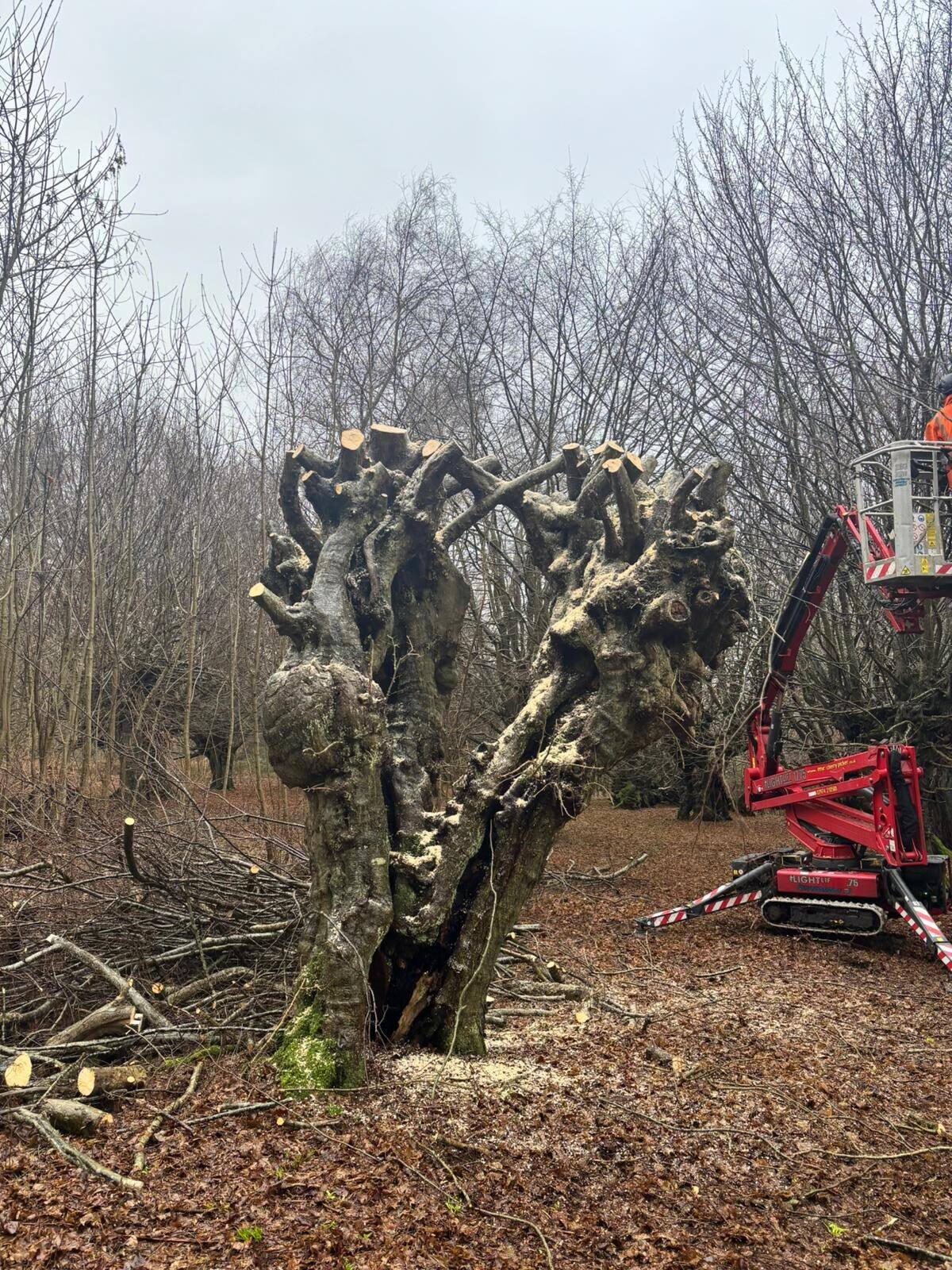
Book a free site visit. We'll walk the ground with you, explain what each cut does, and quote transparently.
0800 567 7433Or request a quote online — replies within 48 hours